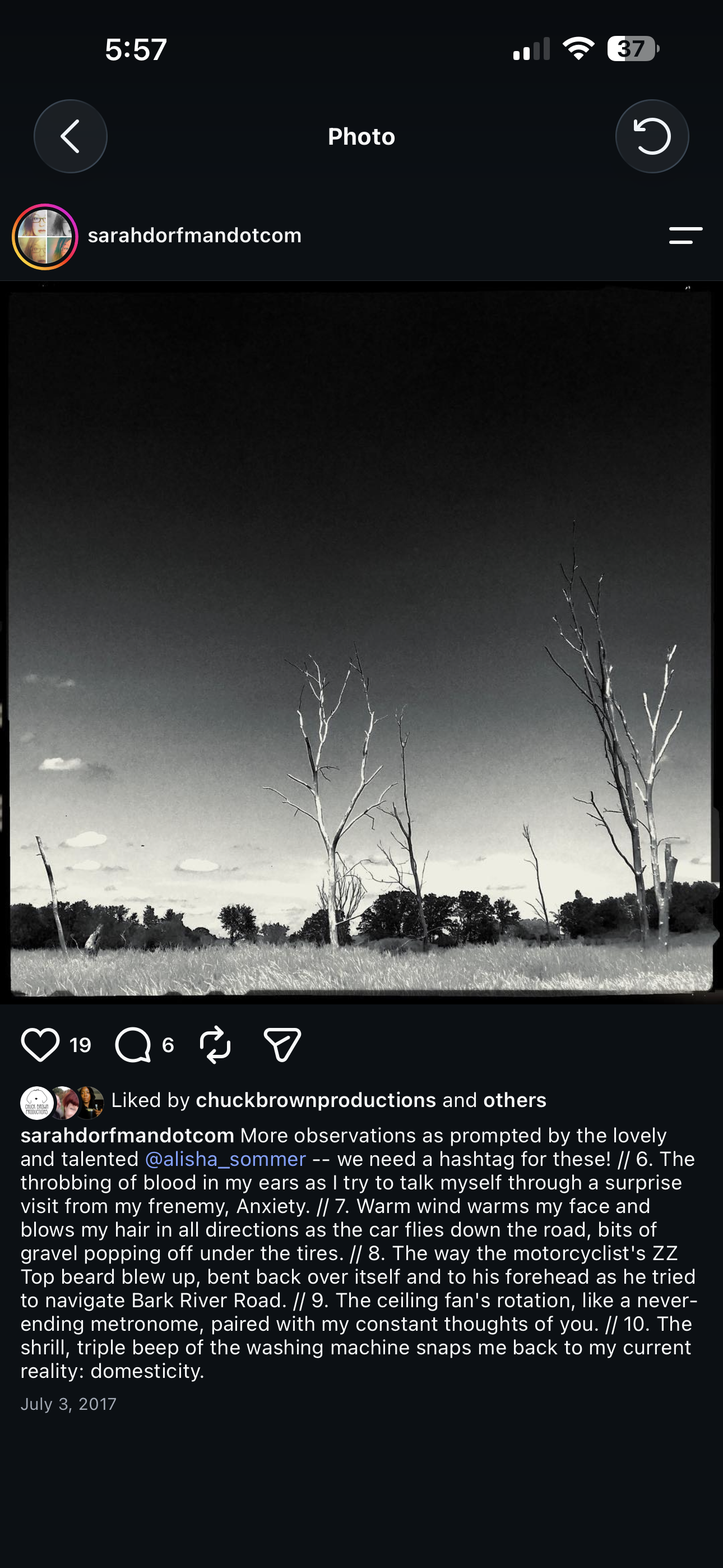
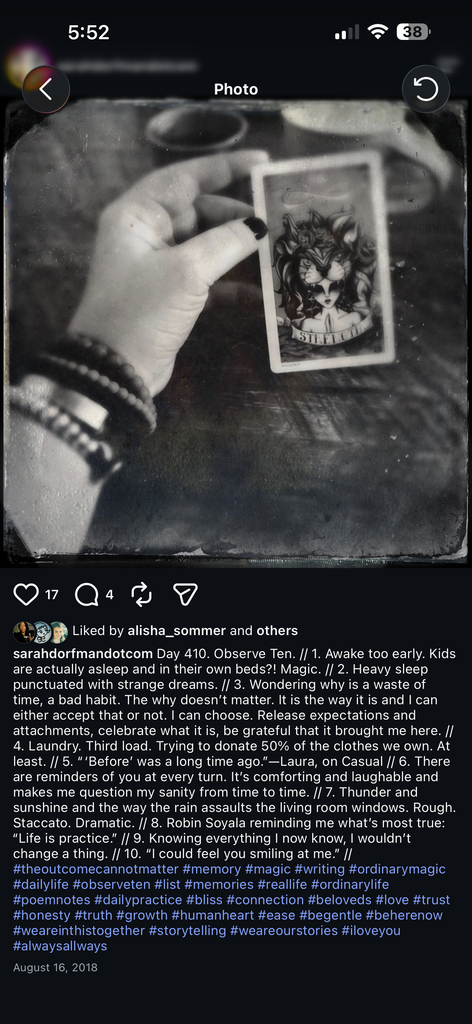
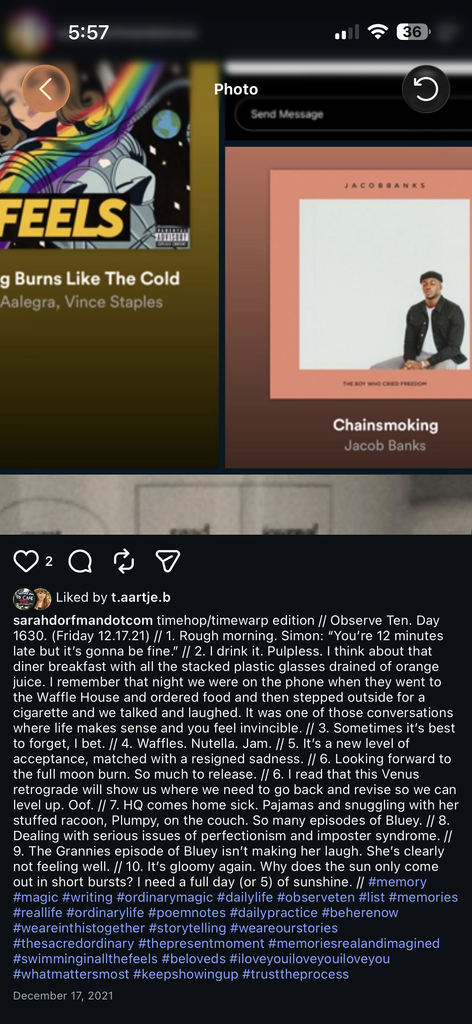
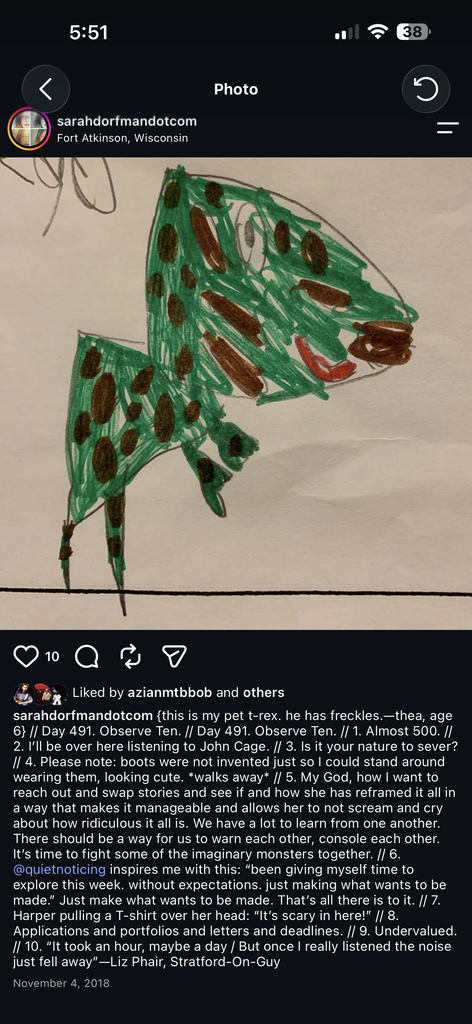
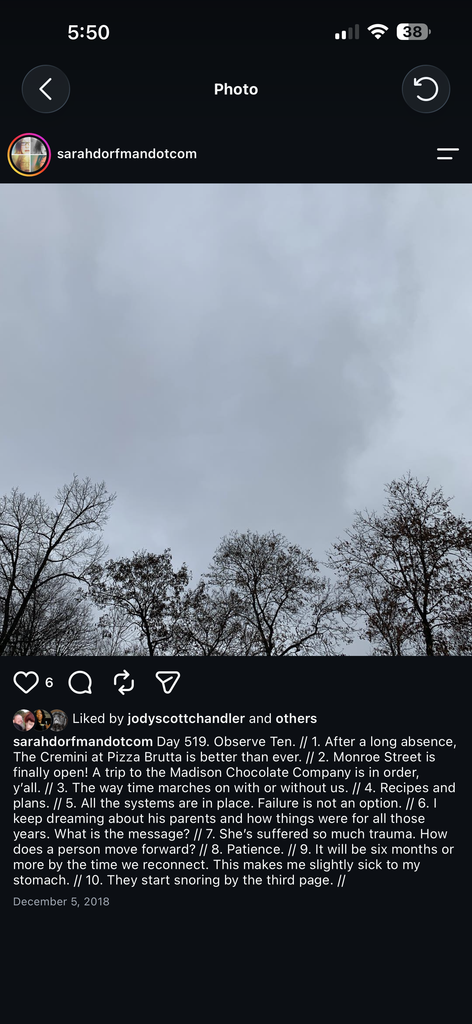
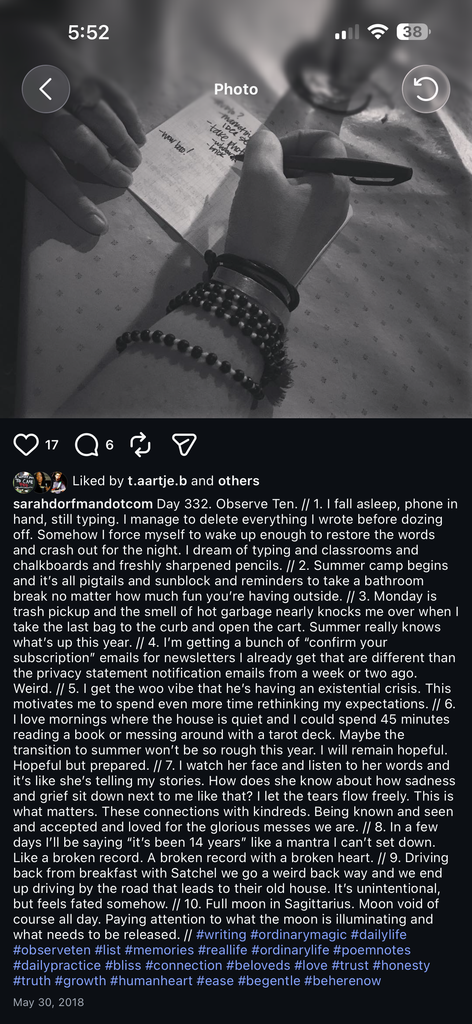
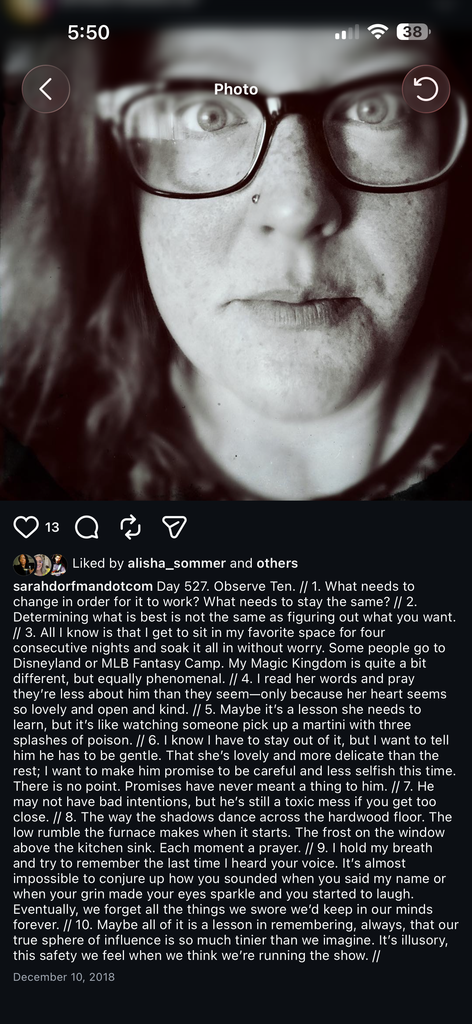
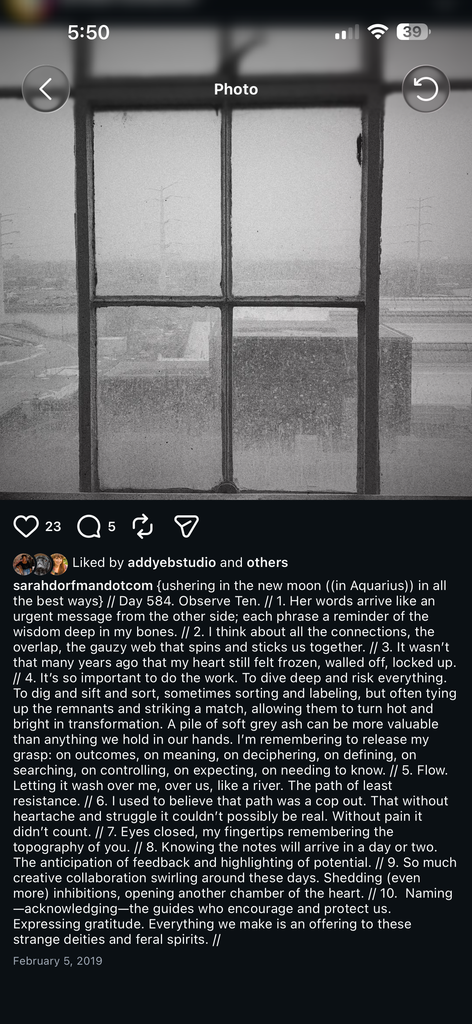
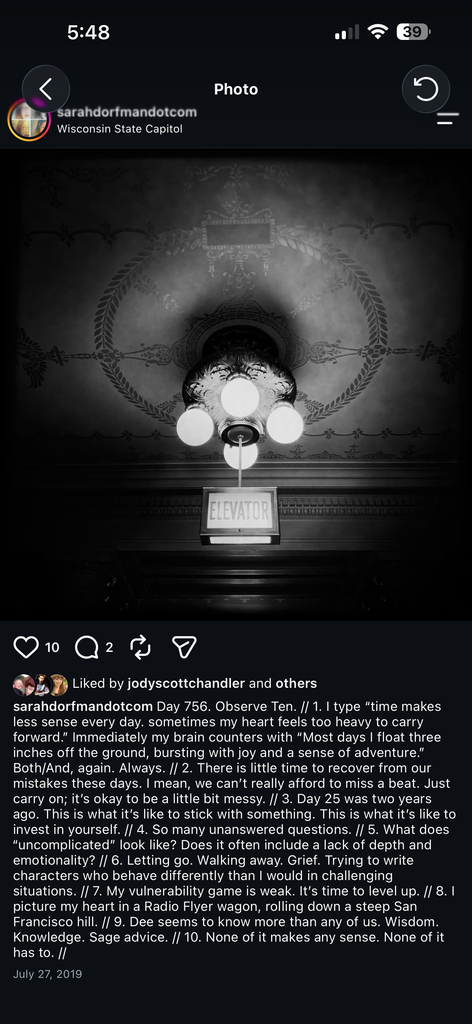
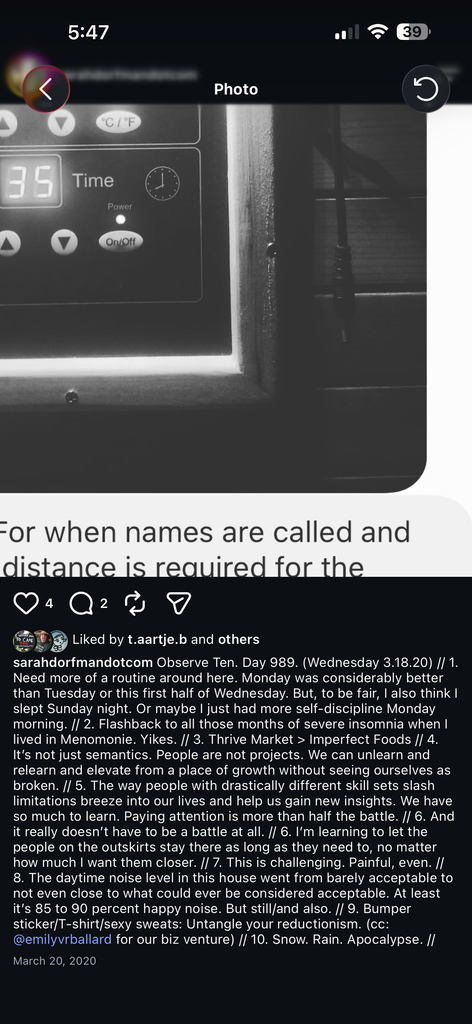
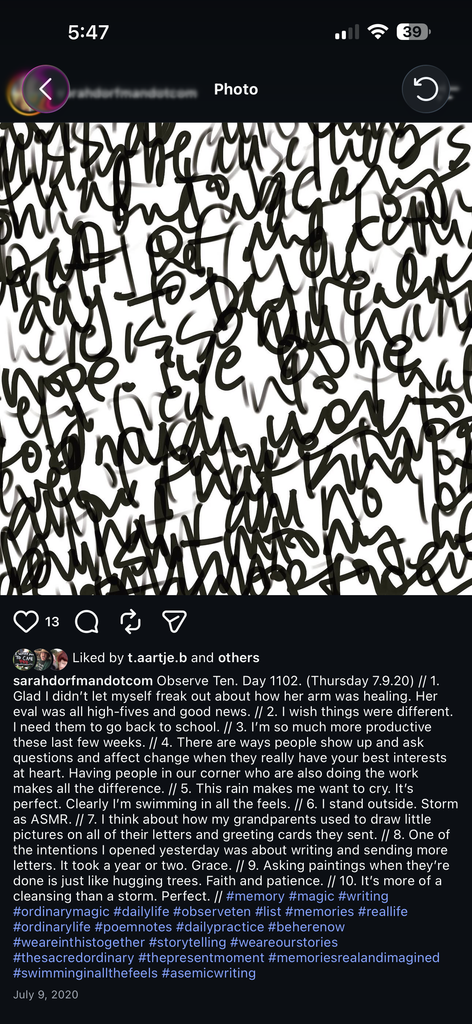
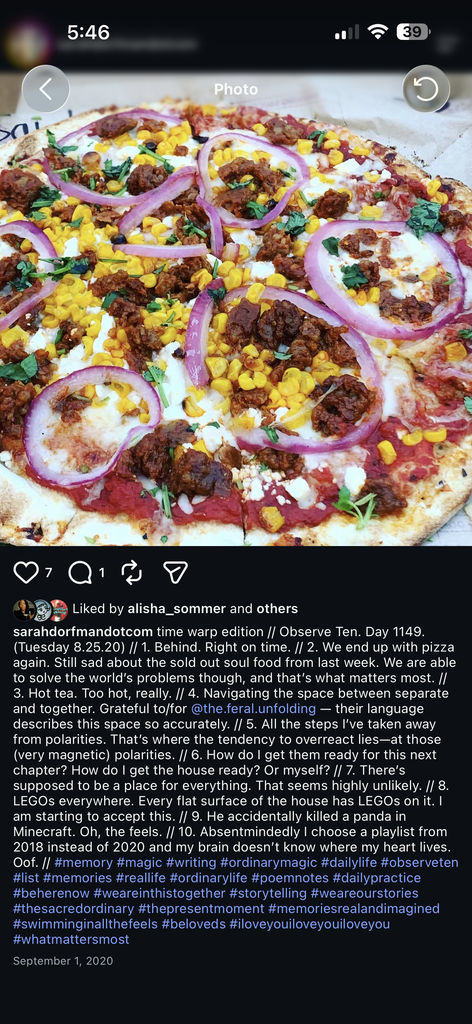
My friend Alisha Sommer is the fabulous human who invited me (and everyone else who subscribes to her newsletter) to start the practice that I came to call Observe Ten.
Here is what she wrote in her newsletter in July 2017:
“I listened once more to the conversation between Krista Tippett and poet Marie Howe. How she said that she challenges her students to list 10 observations – just 10 things they’ve observed that day – without using any kind of metaphor. How she said that it forces them to see. To finally be present. To name a thing for what it is. And that what happens is that they begin to understand that life, as it is happening in those moments, is all that there really is.
For today and tomorrow and the day after that and the day after that, I am choosing to make myself see again. Just 10 things. Just 10 ways in which the world moved me.
Will you join me?
xoxo
A”
First, I listened to the conversation Alisha mentioned between Krista Tippett and Marie Howe on NPR. Then, I dove in and joined her. And what began as a simple invitation to notice ten things a day became one of the most meaningful, transformative practices of my life.
My practice has evolved over the years. I certainly haven’t followed the no-metaphors rule. In fact, metaphors have become some of my favorite observations.
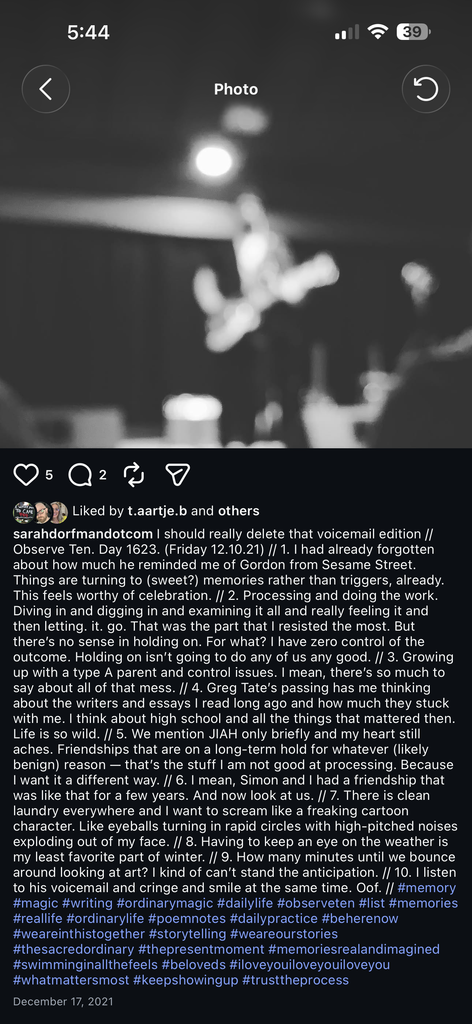
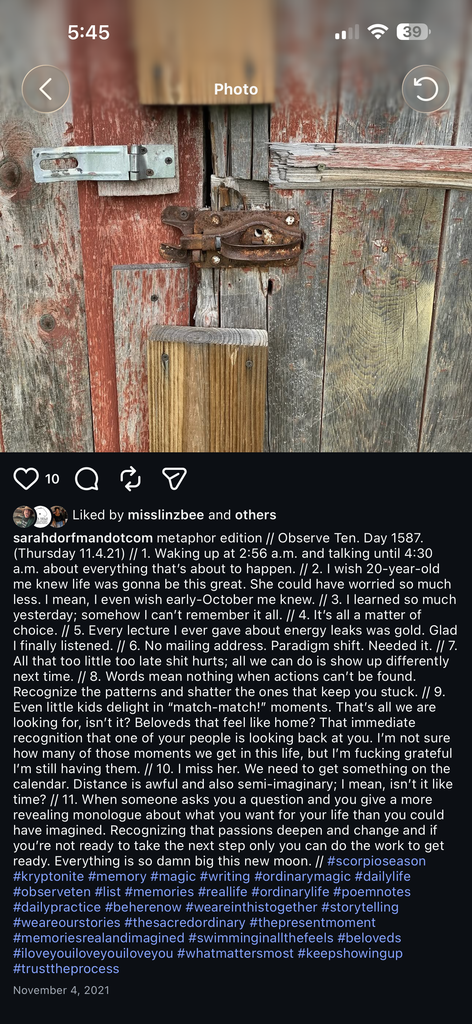
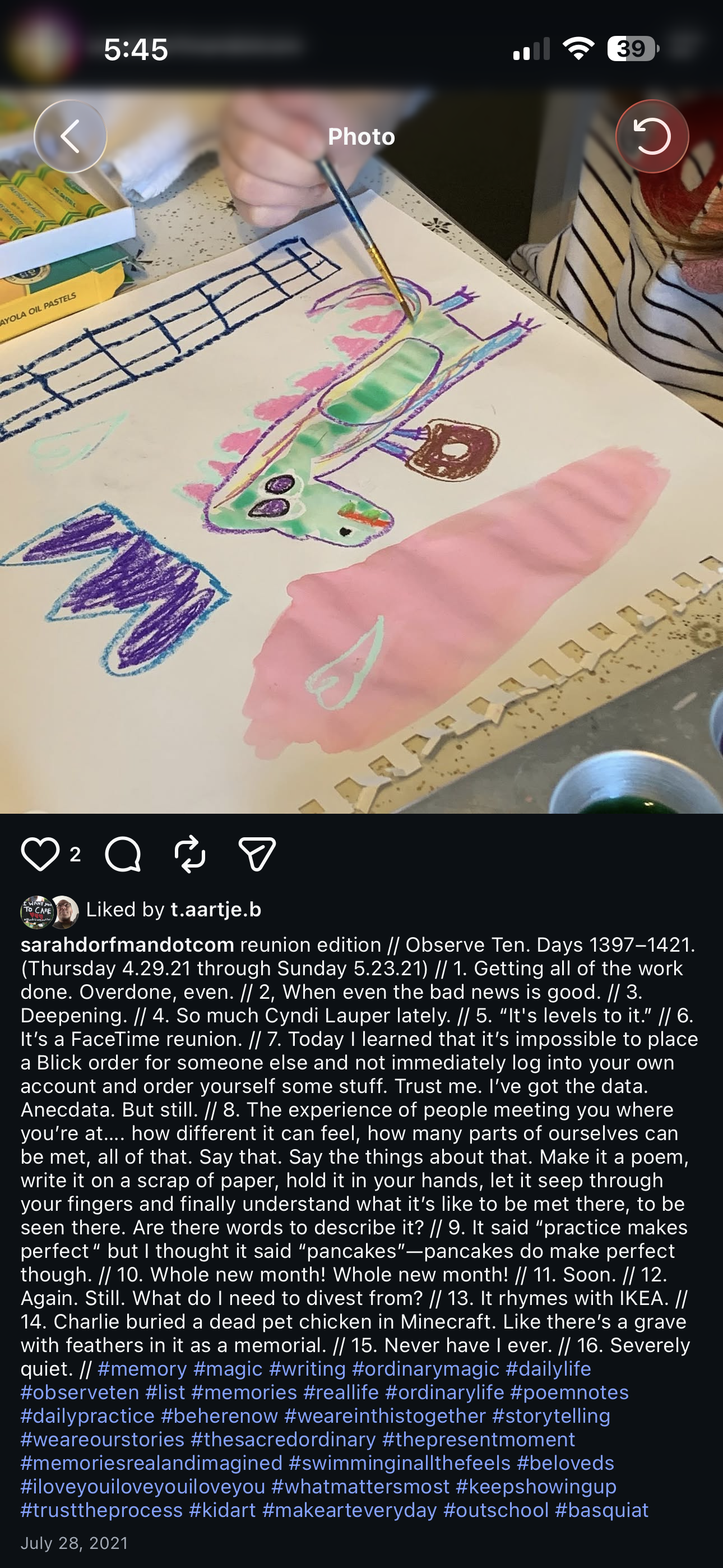
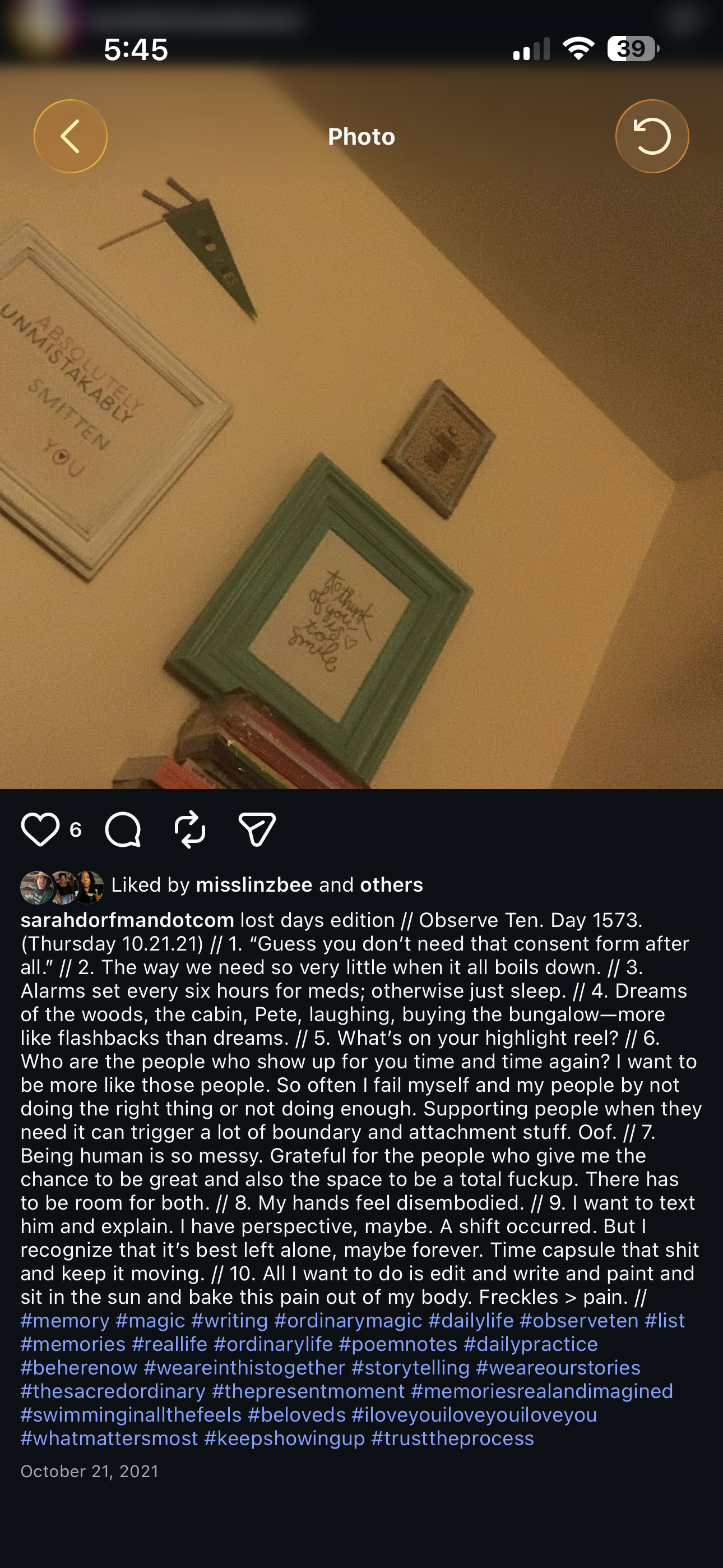
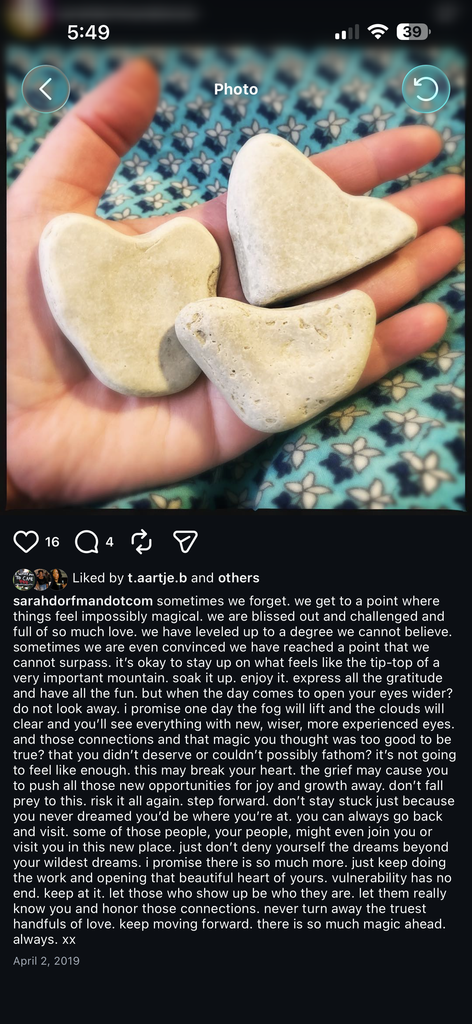
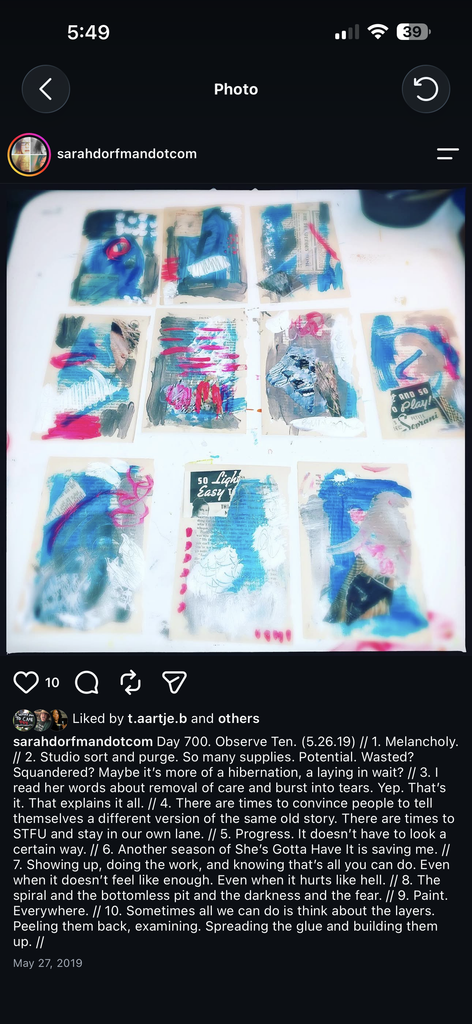
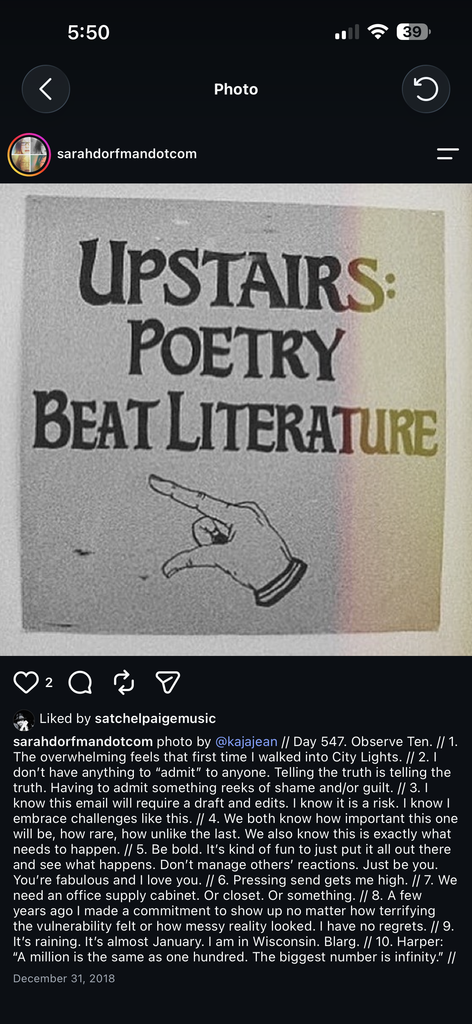
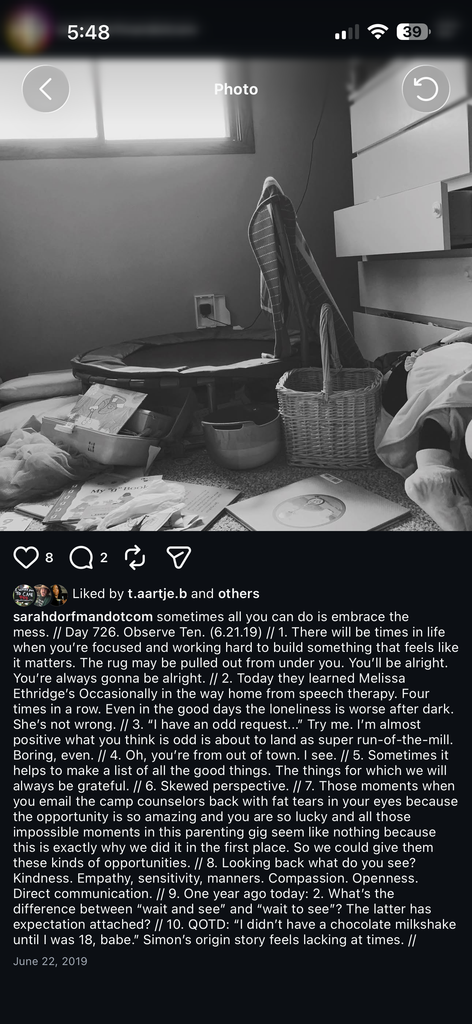
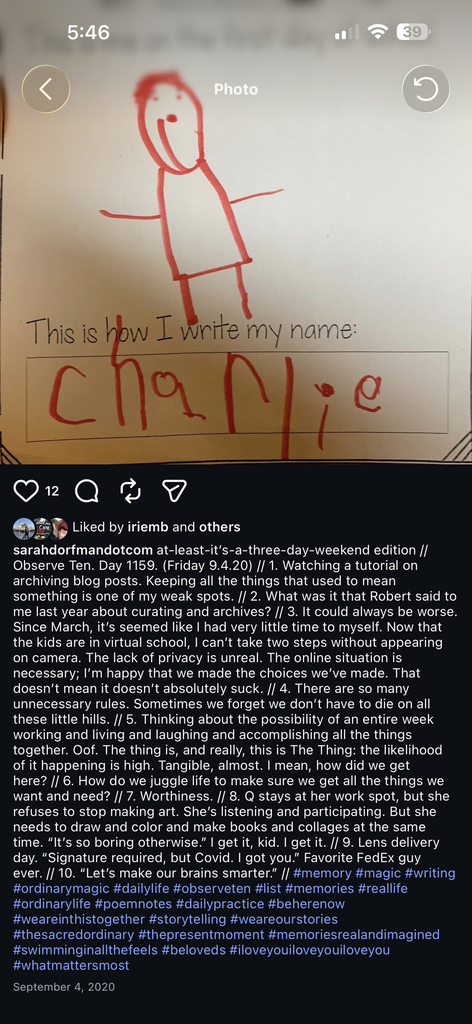
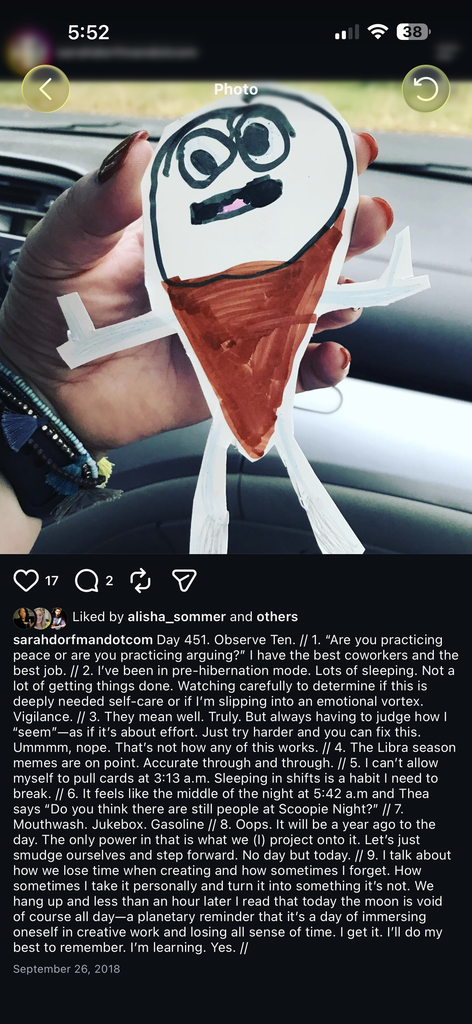
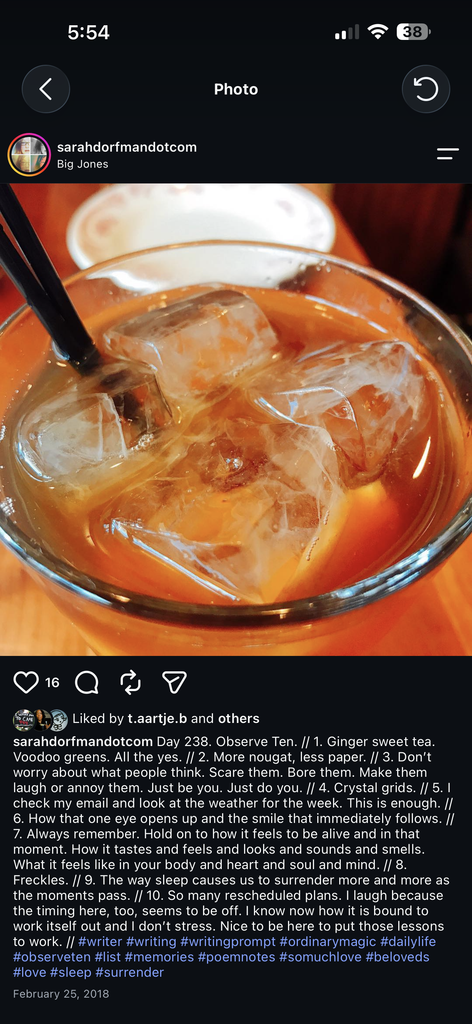
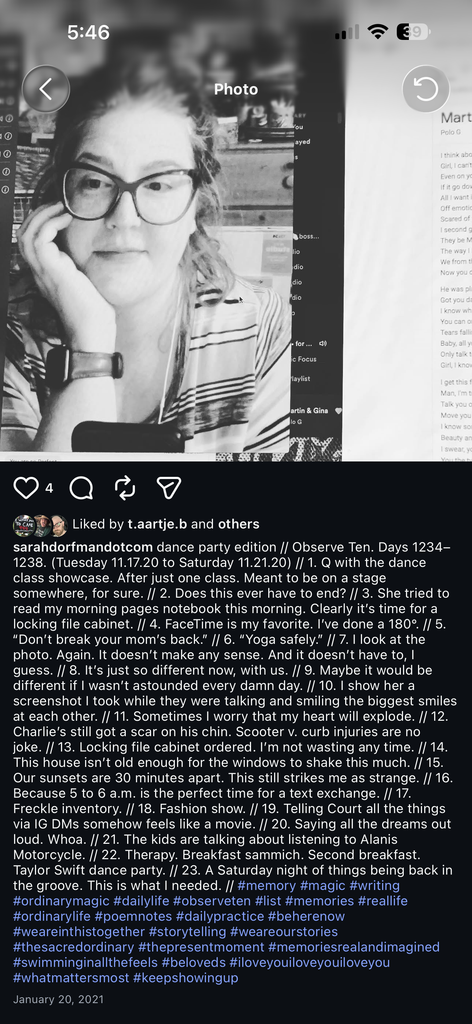
I often post the Quote of the Day that I would otherwise have scribbled down on a napkin or in a notebook. Sometimes it’s brain drain/word vomit/gibberish. And so often it’s #poemnotes—little bits of images, phrases, or metaphors that I want to return to when it’s time to really sit down and write with a capital W.
But somewhere along the way, something shifted.
I stopped just writing down what I noticed and started noticing things because I knew I would write them down.
And that distinction has changed my life.
When you commit to observing the world every day, you begin to move through it differently. You pay attention. You listen more closely. You become curious about things you might otherwise have walked right past. The ordinary becomes interesting. The mundane becomes worthy of examination.
Moments that might have disappeared into the blur of an otherwise forgettable Tuesday become something you can hold on to.
It’s not that every day is extraordinary. It’s that every day contains something worth noticing.
And sometimes you have to look really, really hard to find it.
That’s part of what makes this practice so important to me. It doesn’t require a beautiful day, a profound revelation, or a sudden burst of inspiration. It doesn’t even require me to have anything particularly interesting to say.
Some days, the observations come easily. Other days, I have to work for them. And some days, what I notice isn’t beautiful or inspiring at all. Sometimes it’s uncomfortable, frustrating, sad, or just plain weird.
But that’s life, isn’t it?
The point isn’t to find ten beautiful things. The point is to notice what’s actually there.
I think the most important thing is to do it. Every day. And not worry about rules, even (especially) the self-imposed kind.
There is an incredible freedom in letting yourself create something without demanding it be good. Or finished. Or even coherent. Some days, what I write feels meaningful. Other days, it’s a collection of half-formed thoughts that may never amount to anything.
And that’s okay.
Not everything I write needs to become something. Sometimes the writing itself is the something.
That realization has been enormously liberating.
I’ve spent so much of my life loving creative pursuits but struggling to make them a consistent part of my everyday existence. There’s always something else to do, some responsibility demanding attention, some reason to put creativity off until tomorrow.
It’s easy to convince yourself that writing requires a certain amount of time, a particular state of mind, or something important enough to say.
Observe Ten dismantled all of that.
I don’t need an uninterrupted afternoon or a brilliant idea. I don’t need to be inspired. I don’t even need to feel particularly creative.
I just need to show up.
And showing up, day after day, has taught me something important about creativity: it’s not just something that happens when inspiration strikes. It’s something you cultivate. Something you practice. Something you make space for, even when life is full of other things.
For me, there’s also a certain accountability in posting my observations. But more than that, it’s been surprisingly wonderful to put sometimes deeply personal things into the world and realize it’s okay.
I can share something vulnerable, imperfect, unfinished, or a little weird, and the world keeps turning.
Throwing my writing out there isn’t going to cause me to drown in feels.
And there’s something profoundly freeing about that, too.
I’ve learned to be less precious about my words. Less afraid of what other people might think. More willing to let something exist in the world without polishing it to death first.
Not every thought needs to be fully developed. Not every feeling needs to be explained. Not every piece of writing needs to be understood by everyone who reads it.
Sometimes it’s enough just to put it out there.
And perhaps one of the most unexpected gifts of this practice is that, over time, those little observations have become a record of my life.
Not the big milestones or the carefully curated moments we tend to preserve in photographs and social media posts, but the tiny, fleeting details that make up the actual experience of being alive.
The things people say. The strange thoughts that pass through my head. The moments of beauty, absurdity, frustration, wonder, and everything in between.
All those little things that might otherwise have been forgotten.
And I think there’s something extraordinary about that. About having a record of what caught my attention, what made me laugh, what made me think, what moved me, and what mattered to me on an otherwise ordinary day.
It’s a kind of autobiography written in fragments.
But more than anything, Observe Ten has changed the way I experience the present.
I think about Alisha’s original invitation, and Marie Howe’s challenge to her students to simply see. To name a thing for what it is. To recognize that life, as it is happening in these moments, is all there really is.
I didn’t understand how profound that idea was when I started.
Because the real gift of Observe Ten isn’t the collection of observations I’ve accumulated. It’s what happens in the hours between writing them.
It’s the way I find myself paying attention to the world around me. The way I’m more likely to notice a small detail, linger over an interesting phrase, or recognize something remarkable in an otherwise unremarkable moment.
It’s the way the practice pulls me out of my own head and reminds me to be where I am.
It’s the realization that paying attention is itself a way of participating more fully in my own life.
And that’s what makes this practice so much more than a writing exercise.
It has changed the way I see the world. It has changed my relationship with creativity. It has changed my willingness to be vulnerable.
And, perhaps most importantly, it has changed the way I experience the ordinary moments that make up the vast majority of my existence.
I feel more present, more mindful, more curious, and generally more alive because of it.
And this is the longest period of time I’ve ever gone doing something creative every single day.
That matters to me more than I can adequately explain.
Because somewhere along the way, I stopped waiting for the right moment to be creative. I stopped treating writing as something I would get around to when I had the time, the inspiration, or something important enough to say.
I made room for it in my life, every single day.
And in doing so, I made more room for my life.
It’s such a simple thing, really. Ten observations. Ten moments of paying attention. Ten opportunities to stop moving through the world on autopilot and actually see what’s happening around me.
And yet, nearly a decade after Alisha first extended that invitation, I’m still discovering just how much it has given me.
I can’t imagine my life without it.
So, in the spirit of the invitation that started it all, I’ll extend the same invitation to you.
Will you join me?
You don’t need to be a writer. You don’t need a fancy notebook or a particular talent for noticing things. You don’t need to be profound or poetic or even particularly interesting.
Just pay attention.
Notice ten things.
Write them down.
Do it again tomorrow.
And the day after that.
You might be surprised by what you begin to see.
Because the more closely you look at your life, the more of it you get to experience.